AI in Hospitality: Automating Back-Office Operations
- Arcitech
- 20th October 2026
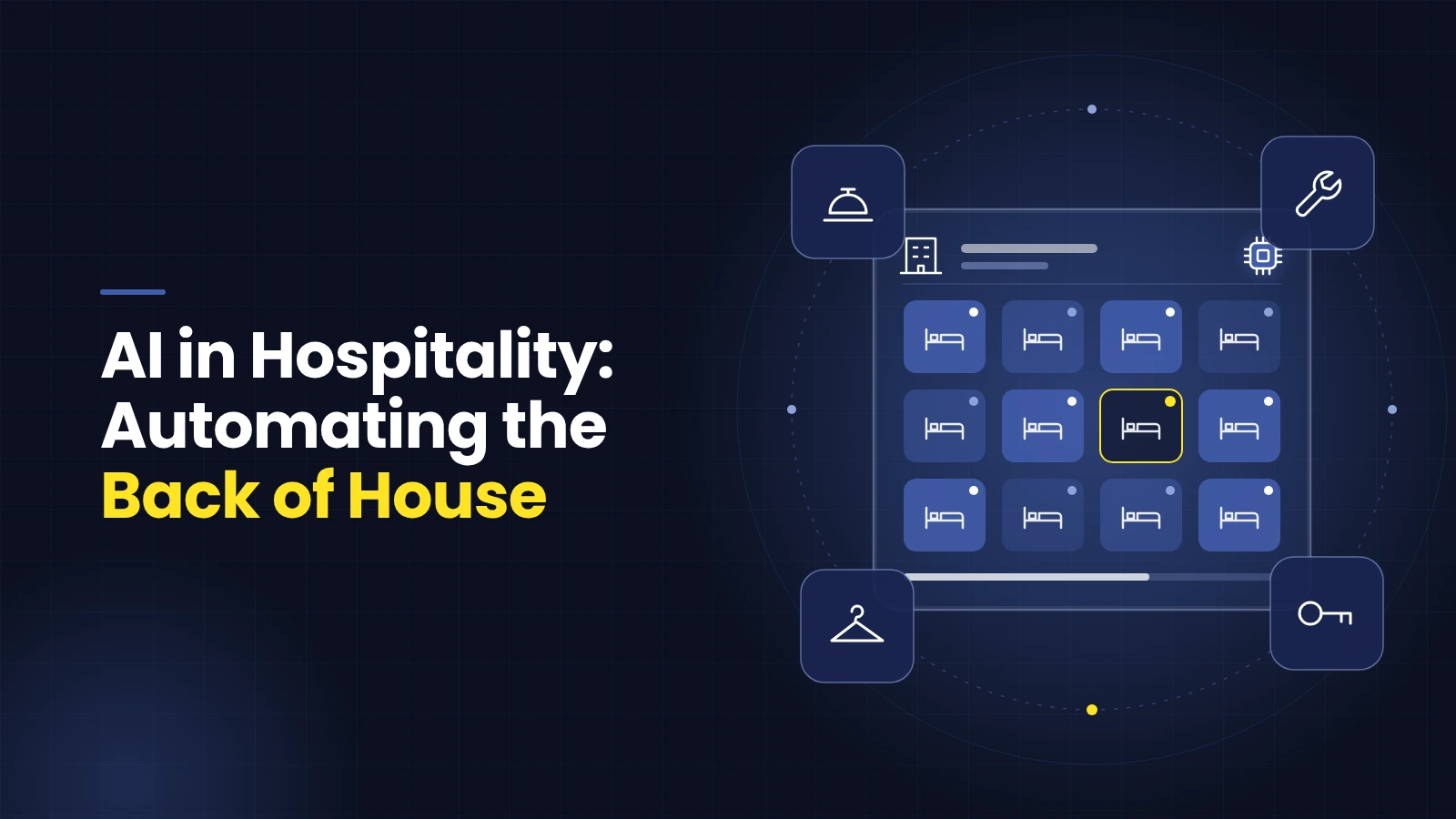
A guest arrives early, but reception cannot confirm whether the room is ready. Housekeeping has finished cleaning, maintenance is checking an air-conditioning fault and the property management system still shows an outdated status.
The delay reaches the guest, even though the underlying problem is coordination between departments. AI in the hospitality industry can support back-of-house work by interpreting requests, organising information and recommending actions. Connected workflows then assign tasks, update systems and escalate exceptions.
For hotel leaders, the opportunity is to reduce the administrative friction that prevents employees from delivering dependable service.
What Does AI in Hotel Operations Include
AI in hotel operations supports activities such as classifying maintenance requests, extracting supplier invoice details, analysing demand and summarising shift information.
Hospitality automation software connects those capabilities with task assignment, approvals and system updates.
The distinction matters. Sending a notification when a room status changes may need a rule. Interpreting a free-text maintenance report may benefit from AI. Start by identifying which part of the workflow needs interpretation and which part needs reliable execution.
Diagnose the Operational Bottleneck First
A busy team does not automatically need more technology. The underlying problem may be conflicting records, incomplete requests or unclear responsibility.
Follow a task from creation to completion and identify where employees wait, repeat entry or chase updates.
Oracle’s housekeeping documentation explicitly recognizes discrepancies between front-office and housekeeping room status, alongside unresolved maintenance requests. These are operational states that need reconciliation.
Follow a task from creation to completion and identify where employees wait, repeat entry or chase updates.
| Operational problem | What to investigate |
|---|---|
| Reception cannot confirm room readiness | Housekeeping, inspection and maintenance status |
| Maintenance requests remain unresolved | Assignment, priority and escalation rules |
| Supplies run short unexpectedly | Stock records, consumption and supplier lead times |
| Supplier invoices wait for approval | Purchase orders, delivery evidence and ownership |
| Shift teams repeat investigations | Incomplete handover records |
Practical Back of House Automation Use Cases
Housekeeping Coordination
Automation can distribute approved task lists, capture completion updates and notify supervisors about outstanding inspections.
AI may assist with workload recommendations using occupancy, departure information and historical task patterns. Supervisors should account for room condition, accessibility requirements and realistic workloads.
Consider a hypothetical hotel where a cleaned room has an unresolved maintenance task. The workflow should show both conditions and keep the room from being released under the hotel’s readiness rules.
A cleaning update alone should not establish that the room is ready for a guest.
Maintenance Request Handling
Employees describe problems differently. “AC leaking,” “water below the unit” and “wet carpet near the air conditioner” may concern similar equipment.
AI can help classify these descriptions and suggest the responsible team. Workflow rules can then assign a task, request missing details and escalate overdue work.
Urgent hazards need established reporting and response procedures. A prediction or classification should not be the only route for escalating a safety concern.
Measure resolution and recurrence, not simply the number of tickets closed.
Purchasing and Inventory Administration
Document extraction can populate supplier, date, amount and reference fields from invoices.
The workflow can compare these details with approved orders and receiving records, then route discrepancies to the appropriate employee.
If an invoice includes linen that has not been recorded as received, finance needs an explanation from the receiving team. Automatically approving the invoice would conceal the unresolved issue.
Keep source documents accessible and preserve approval authority for exceptions.
Shift Handovers and Internal Knowledge
AI can draft handover summaries from recorded tasks and approved operational updates.
Require links to the underlying records. A useful summary distinguishes completed work, unresolved issues and actions awaiting approval.
Use approved sources for policy questions, and give employees a clear escalation route when information is missing or contradictory. Generated text should not create new operating instructions.
Integration Makes the Workflow Useful
An accurate recommendation provides limited value if it never reaches the employee or system responsible for acting.
Define which application owns room status, task completion, stock and financial records.
Oracle’s hospitality integration documentation describes business events that can communicate reservation or profile changes to connected applications. Actual integration options depend on the platform and configuration.
Monitor failed updates, prevent duplicates during retries and establish a fallback process when connectivity is unavailable.
Benefits to Measure
Less Administrative Work
Connected tasks can reduce calls, copying and repeated status checks. Employees gain time for inspections, maintenance and service delivery.
More Dependable Handoffs
Clear ownership and current records help departments act without reconstructing what another team has done.
Better Visibility Across Properties
Consistent task definitions can help managers compare backlogs and recurring issues. Comparisons should account for property size, occupancy and service standards.
Risks and Tradeoffs
Poor Data Can Produce Poor Recommendations
Incomplete stock records or outdated room information can undermine automation. Assign responsibility for maintaining critical data.
Excessive Alerts Distract Teams
Notifications should identify an owner and required action. Repeated low-value alerts can make urgent issues harder to notice.
Staff Need Meaningful Control
Use human-in-the-loop AI for uncertain classifications, material purchases and consequential operational changes.
Added Systems Bring Added Costs
Check existing property management and task-management capabilities first. Include integration, training, maintenance and oversight in the business case.
Implementation Steps and KPIs
Pilot one workflow at one property. Establish a baseline and test late departures, missing records, duplicate requests and system outages.
Review operational speed alongside service quality and employee feedback.
| KPI | What it reveals |
|---|---|
| Room readiness turnaround | Time from departure to confirmed readiness |
| Room-status discrepancy rate | How often departmental records conflict |
| Maintenance resolution time | Speed of resolving reported issues |
| Repeat maintenance rate | Whether problems return after closure |
| Invoice exception age | How long purchasing discrepancies remain unresolved |
| Manual coordination time | Staff effort spent chasing updates |
Improve the Operations Behind the Stay
AI in the hospitality industry works best when it supports a clearly defined process and keeps operational responsibility visible.
Start with a recurring coordination problem, connect reliable records and expand when the pilot demonstrates useful results.
Arcitech’s published AI automation services cover business workflows and enterprise integration planning. An initial discussion can map departmental handoffs, existing systems and a suitable pilot scope.
Transform Your Hotel Operations with AI
Simplify housekeeping coordination, maintenance requests, purchasing, and finance workflows with intelligent automation that helps hotel teams work more efficiently.
Frequently Asked Questions
1. Does hotel automation always require AI?
No. Rules and integrations can handle predictable updates and approvals. AI is more relevant when information needs interpretation.
2. Can AI replace housekeeping or maintenance teams?
It can support coordination and administration. Physical work, inspections and operational judgment still require appropriately trained employees.
3. Can hospitality automation software connect to an existing PMS?
Potentially. Compatibility depends on supported interfaces, permissions and the specific property management system configuration.
4. What should a hotel automate first?
Choose a recurring workflow with clear ownership and measurable delays, such as room-status updates or maintenance assignment.
Check out our Social Media