AI Agent vs. Chatbot: Key Differences Explained
- Arcitech
- 04th September 2026
What Is a Chatbot?
What Is an AI Agent?
AI Agent vs. Chatbot: Key Differences
| Chatbot | AI Agent | |
|---|---|---|
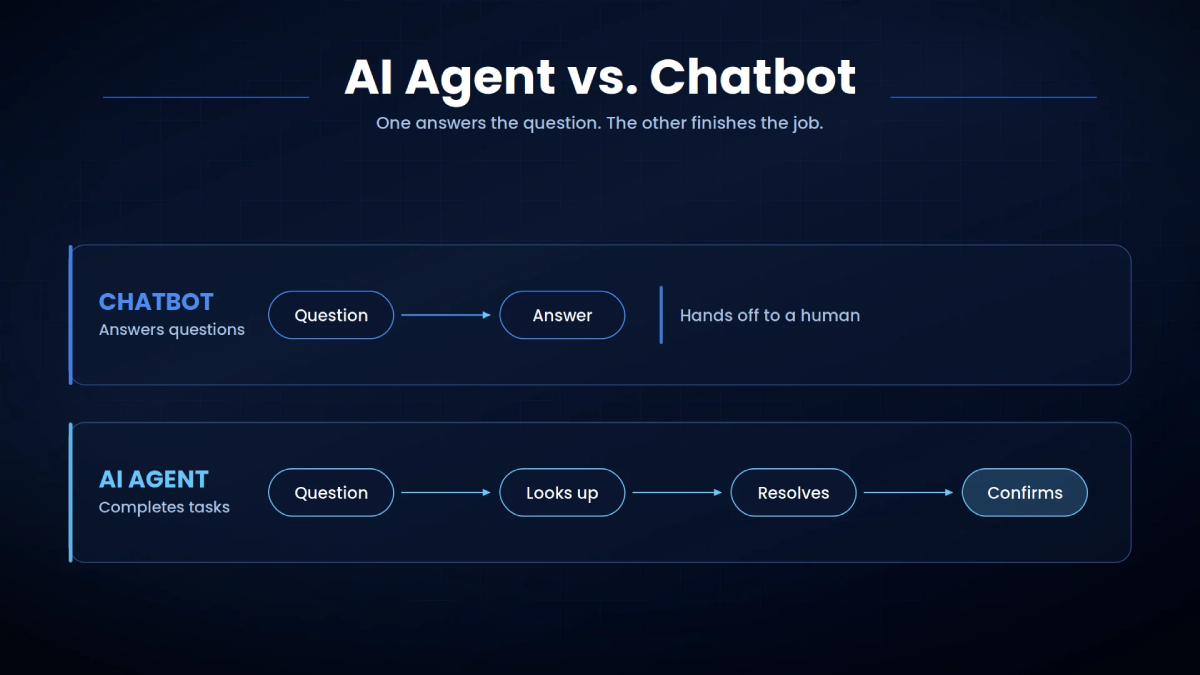
| Core function | Answers questions | Completes tasks |
| Action-taking | Typically none — hands off to a human | Executes actions in connected systems |
| Reasoning | Matches intent to a response | Plans steps toward a goal |
| Escalation | Frequent, for anything beyond FAQ | Only for exceptions or low-confidence cases |
| Typical resolution rate | 20–40% of conversations fully contained | 55–90% depending on task complexity and integration depth |
| Setup complexity | Low — scripts or a knowledge base | Higher — requires system integrations and guardrails |
Benefits of Chatbots
- Fast and inexpensive to deploy for FAQ-style volume
- Predictable behavior — easier to test and audit since responses are scripted or narrowly scoped
- Good fit for low-stakes, high-volume, information-only questions
Benefits of AI Agents
- Resolves issues end-to-end instead of deflecting to a human
- Reduces cost per contact by cutting the number of live-agent handoffs
- Scales with task complexity rather than being limited to a fixed script
Real-World Use Cases
- Store hours and location lookups
- Policy and FAQ answers
- Basic troubleshooting scripts
- Lead capture forms disguised as conversation
- Processing a return or refund end-to-end
- Rescheduling an appointment across a booking system
- Resolving a billing dispute by pulling account history and issuing a credit
- Triaging and routing IT tickets with context already attached
Which One Do You Actually Need?
Don't upgrade to an agent just because the technology is trending. Salesforce's 2026 State of Service research found AI agent adoption jumped from 39% to 66% of service organizations in a single year, and most of that shift is happening in workflows where a chatbot was hitting a ceiling — not replacing chatbots that were already working fine.
Where Chatbots Hit Their Ceiling
That's the point where a chatbot hands off to a human — and where an AI agent, connected to the same backend systems, can often close the loop instead.
Organizations that've moved to agent-driven support commonly report containment in the 55–90% range for well-scoped tasks, since the agent isn't just informing the customer, it's finishing the job.
Conclusion
AI chatbots are designed primarily to communicate, answer questions, and guide users. AI agents expand that model by planning tasks, interacting with applications, making permitted decisions, and taking actions toward defined goals.
Chatbots can improve customer and employee experiences.
AI agents can transform underlying business operations.
As enterprise AI matures, the two technologies will increasingly converge into intelligent systems capable of both understanding users and completing the work they request.
Businesses should evaluate AI solutions based on their ability to integrate with existing processes, systems, governance requirements, and measurable business goals. Arcitech provides AI software development services for custom agents, conversational platforms, and intelligent business applications.
Build Intelligent AI Agents and Conversational Automation With Arcitech
Arcitech helps businesses design and develop custom AI agents, conversational AI solutions, AI-powered chatbots, agentic workflows, and enterprise automation platforms. Whether you want to automate customer support, sales, recruitment, IT operations, internal workflows, or complex enterprise processes, talk to Arcitech about building an AI solution that goes beyond conversation and delivers measurable operational outcomes.
Frequently Asked Questions
1. What is the difference between an AI Agent and a chatbot?
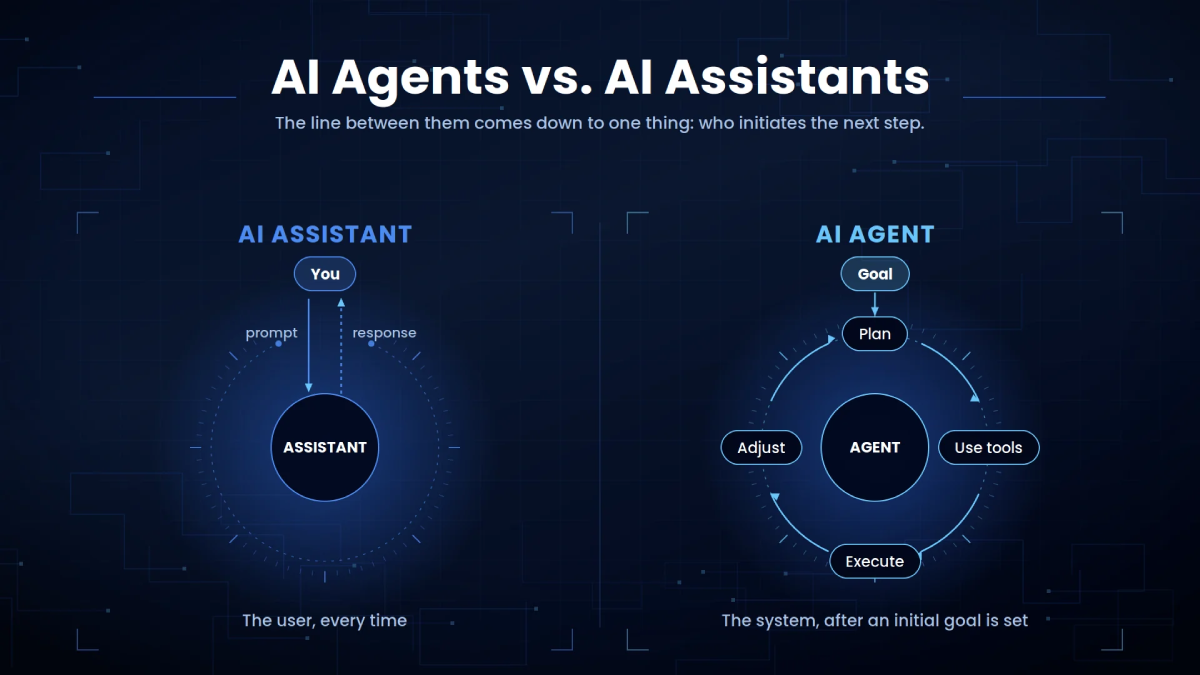
A chatbot primarily communicates with users and provides information, while an AI agent can work toward a defined goal, use connected tools, make permitted decisions, and execute multi-step actions.
2. Is an AI agent more advanced than an AI chatbot?
Generally, AI agents have broader capabilities because they can coordinate workflows and take actions. However, a chatbot may be the better solution when the primary requirement is conversational support or information retrieval.
3. Can AI agents communicate through chat?
Yes. Many AI agents use conversational interfaces. Users may interact with an agent through a chatbot while the underlying system manages planning, tool usage, and workflow execution.
4. What are examples of AI agents?
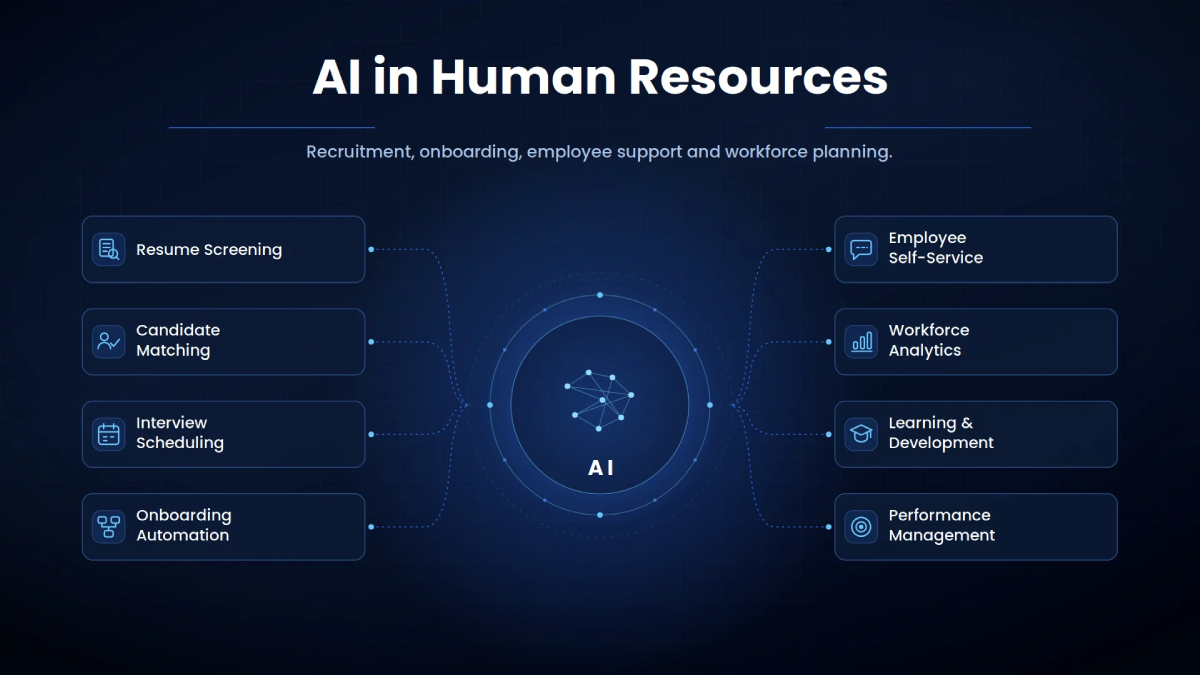
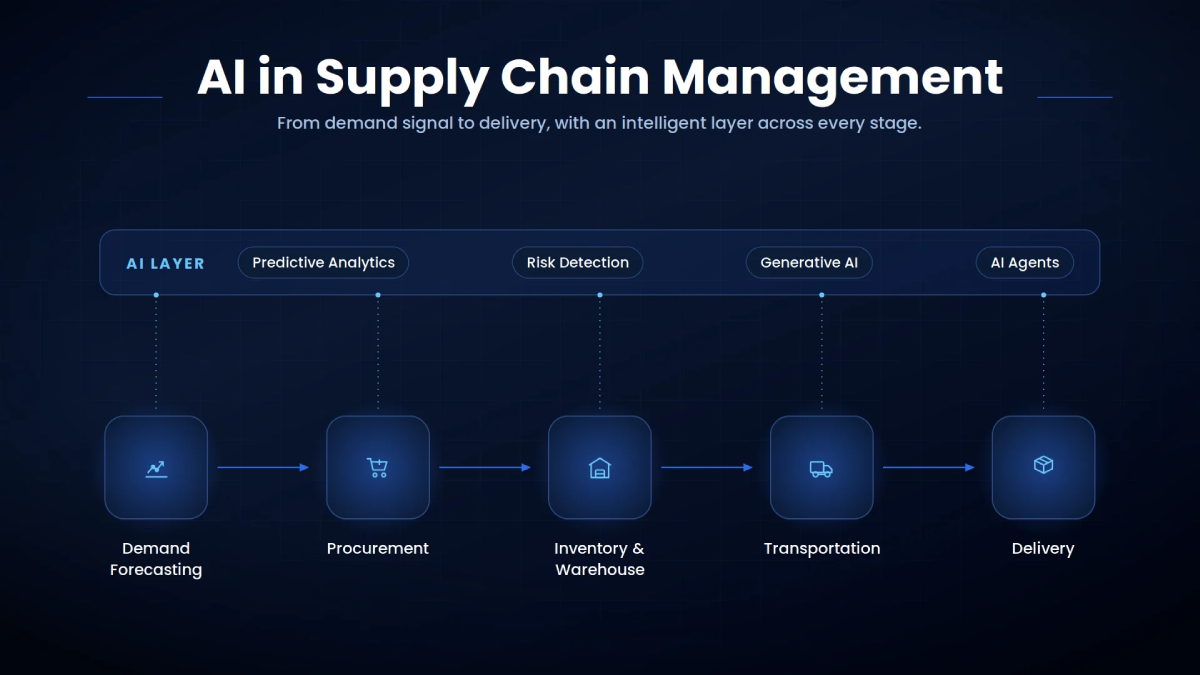
Examples include agents that process customer requests, update CRM systems, coordinate recruitment workflows, resolve IT issues, manage invoice processing, monitor supply chains, or perform tasks across enterprise applications.
5. Should businesses replace chatbots with AI agents?
Not necessarily. Businesses should choose based on the workflow. Chatbots remain effective for FAQs and conversational support, while AI agents are better suited to processes requiring actions across multiple systems. Many businesses can benefit from combining both technologies.
Check out our Social Media