Agentic AI vs Generative AI: What’s the Difference?
- Arcitech
- 05th August 2026
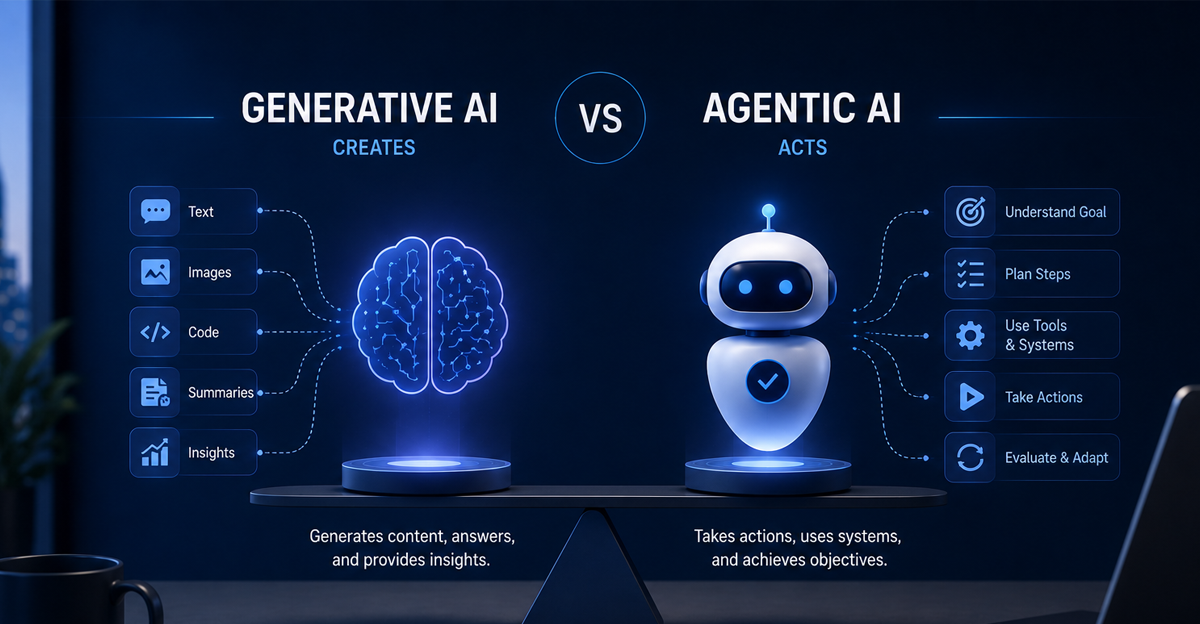
- Generative AI creates
- Agentic AI acts
What Is Generative AI?
- Writing emails, articles, and reports
- Summarizing long documents
- Generating images and marketing assets
- Producing or reviewing software code
- Answering customer questions
- Extracting insights from unstructured information
- Creating product descriptions and sales proposals
What Is Agentic AI?
- A generative AI model for language and reasoning
- Memory for maintaining workflow context
- APIs and tools for interacting with software
- Business rules and permission controls
- Planning and workflow orchestration
- Monitoring and human escalation mechanisms
Agentic AI vs Generative AI: Key Differences
| Area | Generative AI | Agentic AI |
|---|---|---|
| Primary purpose | Creates or transforms content | Pursues goals and completes workflows |
| Typical behavior | Responds to a prompt | Plans and performs multiple actions |
| System interaction | Usually limited | Uses tools, APIs, and enterprise platforms |
| Autonomy | Generally low | Ranges from assisted to autonomous |
| Context | Often limited to a conversation | Maintains task and workflow context |
| Output | Text, images, code, or insights | Completed tasks, updates, or escalations |
| Human role | Reviews and applies the output | Defines permissions and handles exceptions |
| Risk level | Content and information risk | Operational, security, and transaction risk |
How Generative AI and Agentic AI Work Together
Consider an invoice-processing operation:
- Generative AI reads the invoice and extracts relevant information.
- The AI agent checks the supplier in the ERP system.
- It compares the invoice with the purchase order.
- It identifies missing or conflicting details.
- It routes high-value exceptions for human approval.
- It updates the finance system after approval.
- It records every action for auditing.
When Should Businesses Use Generative AI?
- Content and campaign creation
- Document summarization
- Enterprise knowledge assistants
- Report and proposal drafting
- Software code generation
- Research support
- Customer response recommendations
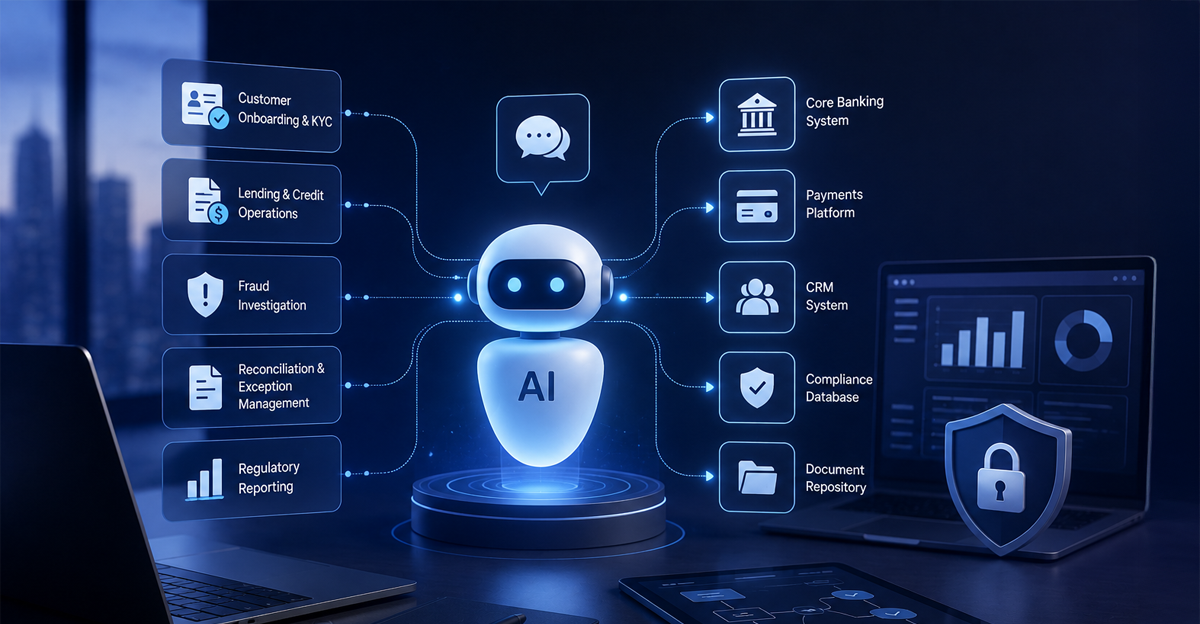
In fintech, for example, agentic AI is already moving beyond simple chat interfaces into coordinated, multi-step decisioning — see AI agents in FinTech for how this plays out in practice.
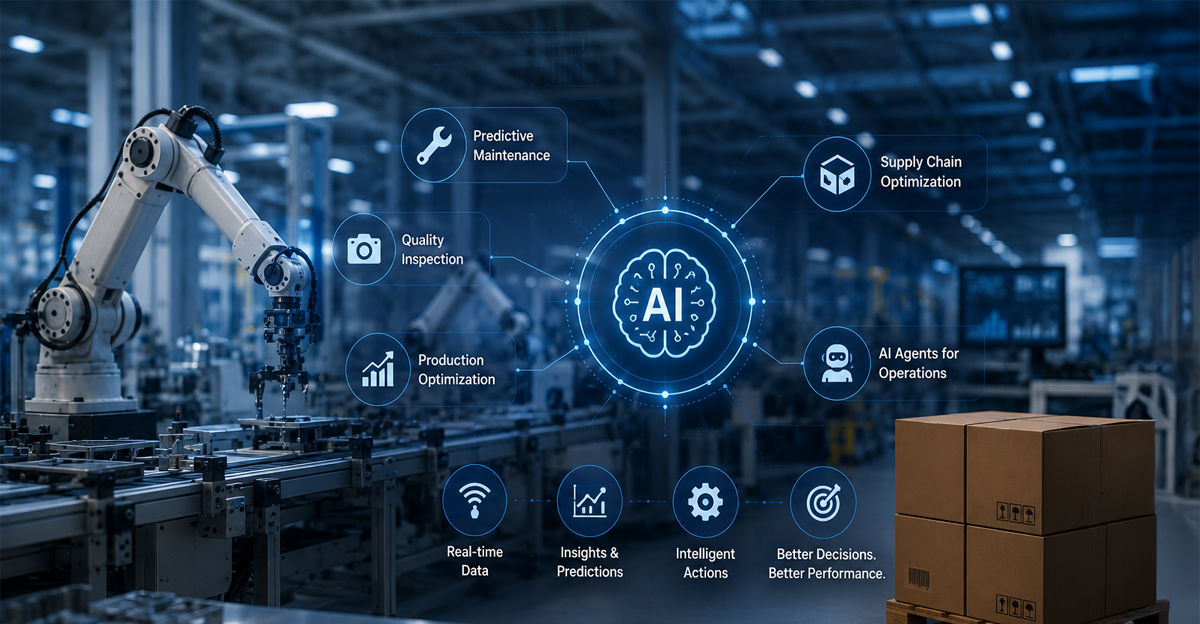
On the factory floor, this same shift shows up as agents that coordinate sensors, maintenance schedules, and production systems rather than just answering questions — see AI in manufacturing for real-world examples.
When Should Businesses Use Agentic AI?
- Customer onboarding
- IT incident resolution
- Invoice reconciliation
- Sales lead qualification
- Procurement coordination
- Employee service requests
- Compliance case preparation
- Supply chain exception management
Which AI Approach Should Your Business Choose?
Choose Generative AI When:
- The main requirement is creating or summarizing information
- A person will decide what happens next
- The task can be completed through one interaction
- Access to operational systems is unnecessary
- The risk of an incorrect output is manageable
Choose Agentic AI When:
- The process includes multiple dependent steps
- The AI must use tools or update business records
- The workflow changes according to context
- Reducing manual handoffs would create measurable value
- Permissions and escalation points can be clearly defined
Risks and Governance Considerations
- What information the agent may access
- Which records it may create or change
- Transaction and decision limits
- Actions requiring human approval
- Identity and access controls
- Logs of decisions and tool activity
- Fallback and emergency shutdown procedures
- Continuous security and performance monitoring
Conclusion
Businesses can use AI automation solutions to address measurable operational needs, establish governance, and gradually expand automation. Used together, generative AI and agentic AI can help enterprises move from individual task assistance to secure, end-to-end business workflows.
Build Enterprise AI Solutions With Arcitech
Transform your business with generative AI, AI agents, intelligent automation, and enterprise integrations built for scale and security.
Frequently Asked Questions
1. Is agentic AI a type of generative AI?
Not exactly. Agentic AI is an approach for building goal-oriented systems. It often uses generative AI models together with tools, memory, planning, integrations, and workflow controls.
2. Can generative AI take actions?
Generative AI can perform simple tool or function calls. A system becomes more agentic when it can plan several actions, evaluate results, and adjust its workflow toward a goal.
3. Are AI agents fully autonomous?
Not necessarily. AI agents can operate at different levels of autonomy. Enterprise agents should have limited permissions and human approval for sensitive, irreversible, or high-value actions.
4. Is agentic AI more expensive to implement?
Agentic AI is generally more complex because it requires enterprise integrations, identity controls, monitoring, testing, workflow design, and stronger governance.
5. Will agentic AI replace generative AI?
A focused pilot may take several weeks or months. Wider implementation depends on data readiness, equipment connectivity, system integrations, testing, security reviews, and the number of facilities involved.
Check out our Social Media