Artificial Intelligence for Human Resources: The Complete Guide to AI in HR
- Arcitech
- 01st September 2026
Many of these processes still depend heavily on repetitive administrative work, disconnected systems, spreadsheets, and manual decision-making.
AI in Human Resources is changing that model.
Artificial intelligence can help HR teams automate routine activities, analyze workforce data, improve candidate screening, personalize employee experiences, and make faster decisions while allowing HR professionals to focus on work that requires human judgment.
For enterprises, the opportunity is not simply to replace manual HR tasks. The bigger opportunity is to build a connected, intelligent HR operation where automation supports employees and decision-makers throughout the workforce lifecycle.
What Is AI in Human Resources?
Instead of relying exclusively on predefined workflows, modern HR AI tools can analyze information, understand natural-language requests, generate content, recognize patterns, and recommend actions.
For example, AI for HR may help organizations:
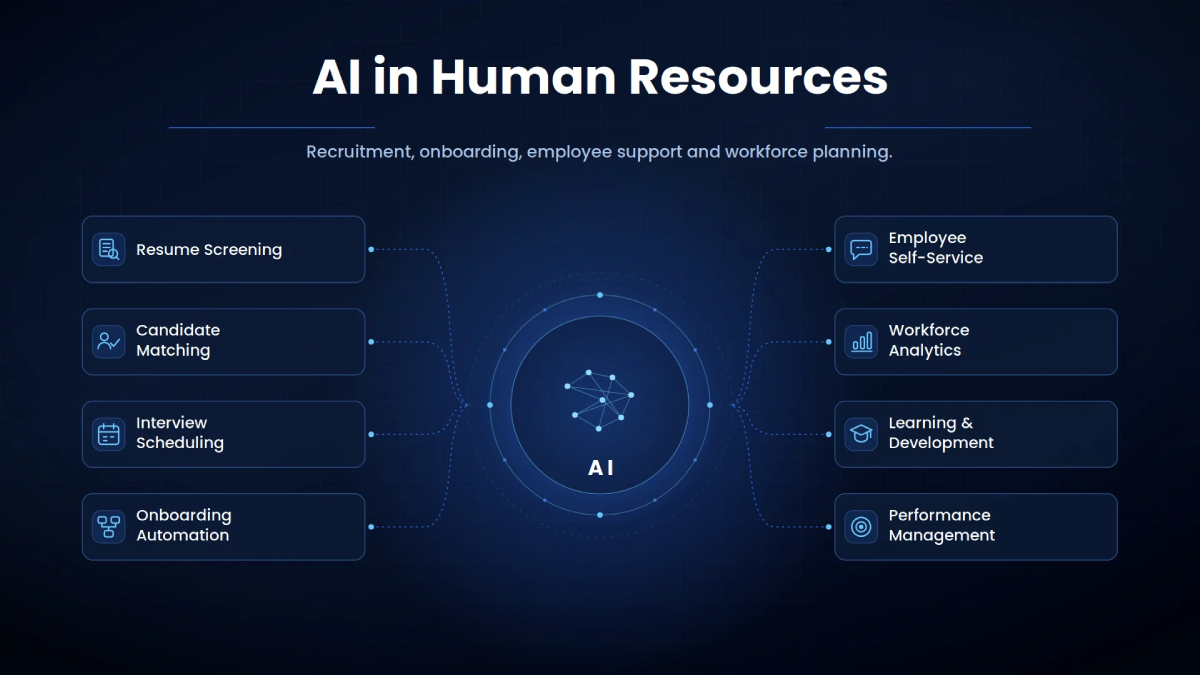
- Screen large volumes of job applications
- Match candidates against job requirements
- Automate interview scheduling
- Answer employee HR questions
- Generate job descriptions
- Analyze employee feedback
- Identify workforce trends
- Support performance management
- Automate HR documentation and reporting
How AI Is Transforming HR Operations
AI-Powered Recruitment and Candidate Screening
Recruiters can receive hundreds or thousands of applications for a single position. Reviewing every resume manually increases hiring time and makes consistent evaluation difficult.
AI HR and recruitment tools can analyze resumes against defined role requirements, identify relevant skills and experience, organize candidate pipelines, and help recruiters prioritize applicants.
More advanced platforms can combine resume information, job requirements, assessments, and structured interviews to create more complete candidate profiles.
AI should support rather than independently determine important hiring decisions. In the United States, the EEOC has specifically highlighted the application of employment discrimination laws to AI used in recruiting, screening, and hiring.
Automated Employee Onboarding
HR automation software can automatically trigger workflows when a candidate accepts an offer.
A connected workflow might:
- Generate onboarding documentation.
- Collect required employee information.
- Create IT access requests.
- Assign training programs.
- Schedule orientation sessions.
- Notify relevant managers.
- Track incomplete onboarding activities.
AI HR Assistants and Employee Self-Service
Instead of navigating multiple HR portals, employees can ask questions through a conversational interface.
For example:
- “How many vacation days do I have?”
- “Where can I find the parental leave policy?”
- “What documents do I need for reimbursement?”
When connected securely to approved HR systems and organizational knowledge bases, an AI assistant can retrieve relevant information and guide employees through routine HR processes.
This can reduce repetitive queries handled by HR teams while giving employees faster access to information.
Workforce Analytics and Planning
AI can help analyze these datasets to identify patterns that might otherwise be difficult to discover.
HR leaders can use workforce analytics to examine:
- Hiring demand
- Skills availability
- Recruitment performance
- Workforce capacity
- Employee turnover patterns
- Training requirements
- Internal mobility opportunities
Key Benefits of AI in Human Resources
Reduced Administrative Work
Faster Recruitment Processes
Better Employee Experiences
More Consistent HR Processes
Data-Driven Workforce Decisions
Real-World Use Cases of AI in HR
Recruitment Automation
Employee Support
Learning and Development
Workforce Planning
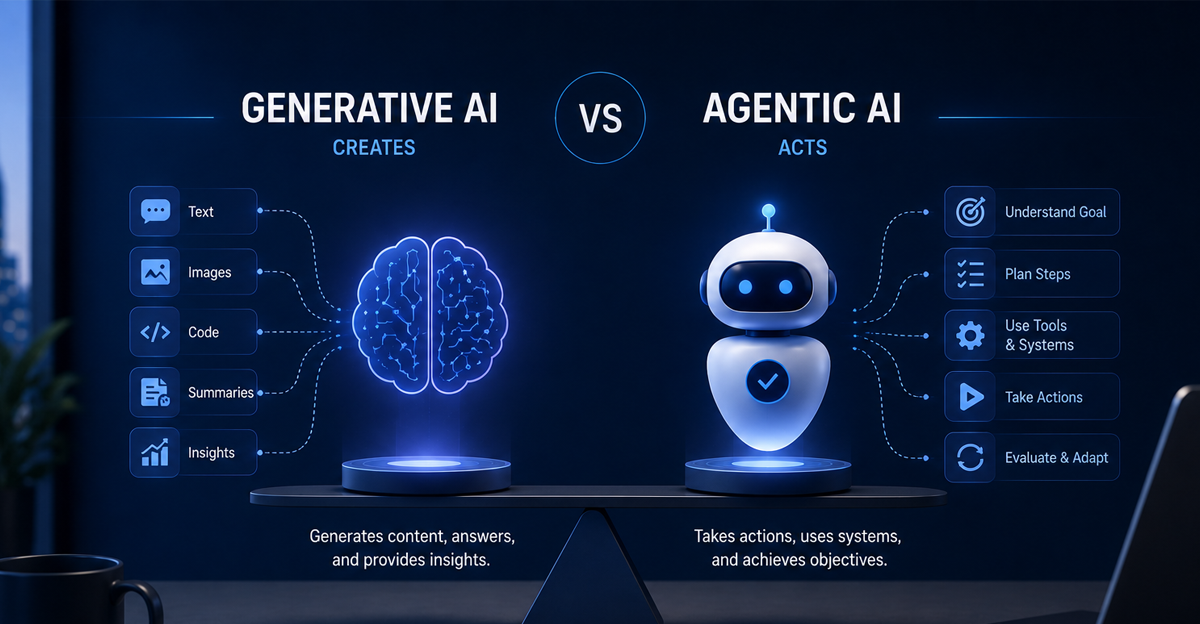
AI Agents: The Next Stage of HR Automation
Traditional automation follows predetermined rules. AI agents can potentially manage more complex multi-step workflows across connected systems while responding to changing information.
For example, a recruitment agent could help analyze applications, coordinate interview availability, update an applicant tracking system, prepare interview information, and notify recruiters when action is required.
Human oversight remains particularly important when AI systems influence employment decisions.
This is also becoming a regulatory consideration. Under the EU AI Act, certain AI systems used for recruitment, candidate filtering, evaluation, promotion, termination, and worker management can fall into the high-risk category, introducing additional requirements for organizations deploying them.
Best Practices for Implementing AI in HR
Then:
- Define the business objective.
- Map the existing workflow.
- Identify appropriate automation opportunities.
- Establish human approval points.
- Integrate AI with existing HR systems.
- Protect employee and candidate data.
- Test outputs for accuracy and potential bias.
- Monitor performance continuously.
Conclusion
The strongest business case for AI in HR is reducing repetitive operational work while giving HR professionals better information, faster workflows, and more time for decisions requiring context, empathy, and judgment. Arcitech’s AI automation services help organizations develop intelligent workflows for HR and recruitment operations.
By combining automation, system integration, responsible governance, and human oversight, enterprises can create HR operations that are more scalable, responsive, and prepared for changing workforce requirements.
Transform Your HR Operations With AI Automation
Arcitech helps organizations design and implement AI-powered HR automation solutions, intelligent workflows, custom AI integrations, conversational AI systems, and enterprise platforms tailored to existing HR processes. Whether you want to automate recruitment workflows, connect disconnected HR systems, introduce AI-powered employee support, or develop a custom HR automation platform, talk to Arcitech about building an AI solution around your business requirements.
Frequently Asked Questions
1. What is AI in Human Resources?
AI in Human Resources is the use of artificial intelligence technologies such as machine learning, generative AI, natural language processing, predictive analytics, and intelligent automation to improve recruitment, onboarding, employee support, workforce planning, and other HR processes.
2. How is AI used in HR?
AI can be used for resume analysis, candidate matching, interview support, employee self-service, onboarding automation, workforce analytics, learning recommendations, HR reporting, and repetitive administrative workflows.
3. Can AI replace HR professionals?
AI is better suited to automating repetitive processes and supporting data analysis than replacing human HR professionals. Activities involving employee relationships, organizational context, sensitive decisions, negotiation, and complex judgment still require meaningful human involvement.
4. What is HR automation software?
HR automation software is technology designed to automate recurring HR activities such as recruitment workflows, onboarding, approvals, employee requests, documentation, notifications, reporting, and system updates. Modern HR automation platforms increasingly incorporate AI to handle more complex workflows.
5. What should companies consider before implementing AI in HR?
Companies should define clear business objectives, evaluate data privacy and security requirements, identify appropriate human oversight, test systems for accuracy and potential bias, integrate AI with existing HR platforms, and monitor performance after deployment. Employment-related AI may also be subject to specific legal and regulatory requirements depending on the jurisdiction.
Check out our Social Media