AI in Accounting: From Manual Processes to Intelligent Finance
- Arcitech
- 06th September 2026
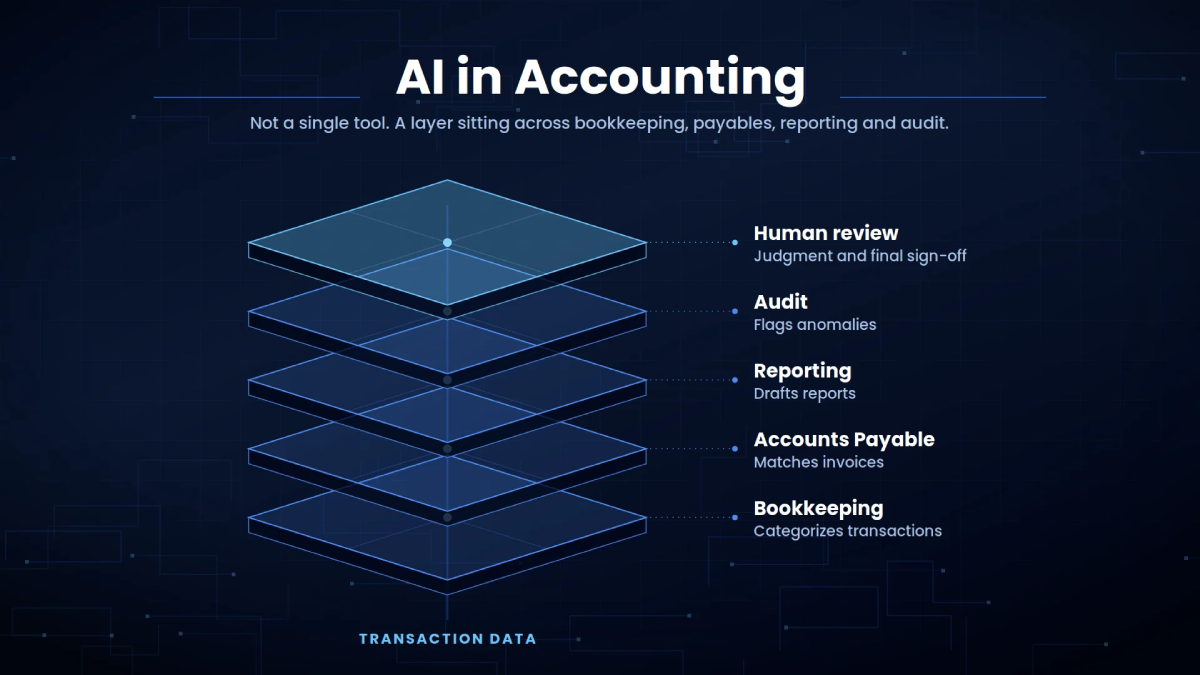
What Is AI in Accounting?
Why Adoption Is Accelerating
The adoption curve backs this up: multiple 2026 surveys now put AI use among accounting and finance professionals well above 80%, up sharply from a year earlier. The gap firms are competing on now isn't whether they use AI — it's how deeply it's embedded versus running as an isolated point solution.
Where AI Delivers Real Impact in Accounting
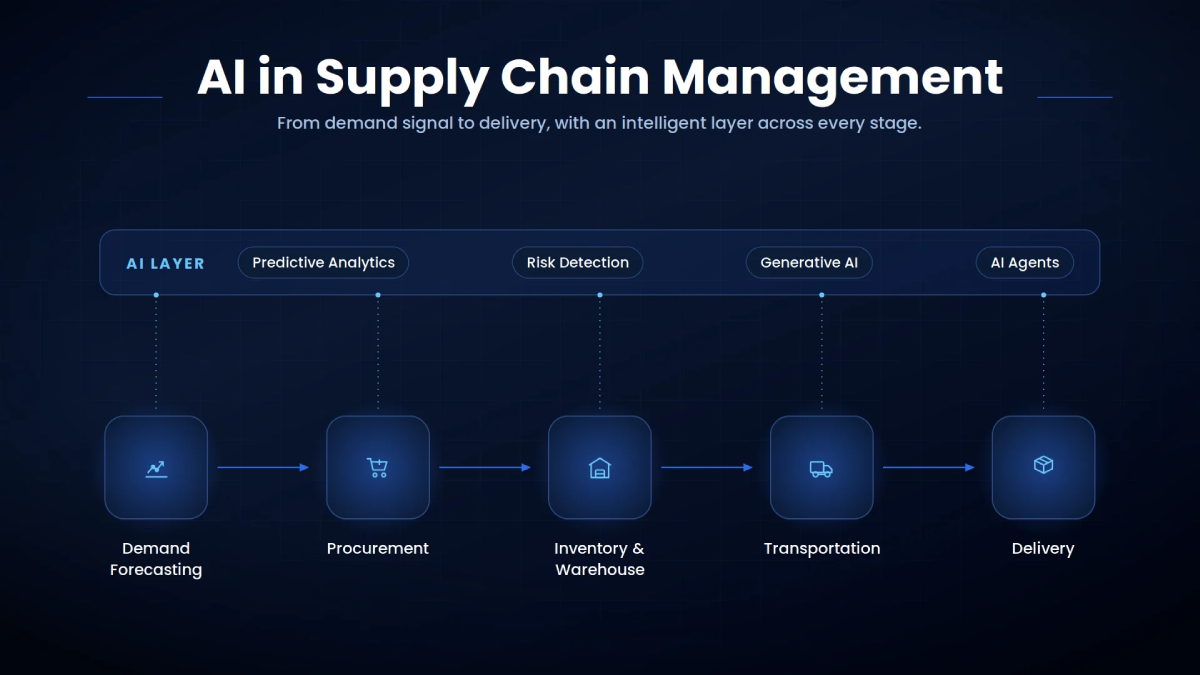
AI-Powered Demand Forecasting
Accounts Payable and Receivable Automation
Audit and Anomaly Detection
Financial Reporting and Forecasting
Will AI Replace Accountants?
The more accurate framing is task-level, not job-level: AI is taking over transaction categorization, first-pass reconciliation, and document processing — the parts of the job that consumed hours without requiring judgment. What it isn't replacing is the parts that do: interpreting numbers for a client, defending a tax position, exercising professional skepticism in an audit, and taking accountability for the final sign-off. Firms leaning into that shift are handling more clients with the same headcount. Firms ignoring it aren't being replaced by AI directly — they're being outcompeted by firms that used it well.
Benefits of AI Accounting Software
- Cuts month-end close time by automating reconciliation and categorization
- Reduces error rates by testing full datasets instead of manual samples
- Frees staff time for advisory work, which carries higher margins than compliance tasks
- Improves cash flow visibility through predictive forecasting
Choosing the Right AI Accounting Software
- Audit trail: Every AI-driven categorization or flag should be traceable and explainable, not a black-box output
- Integration: Native connection to your existing GL, ERP, or practice management system — not a bolt-on requiring manual exports
- Human-in-the-loop review: The system should route exceptions and low-confidence items to a person, not auto-post everything
- Data security: Confirm the vendor doesn't train models on your clients' confidential financial data without explicit controls
Best Practices for Adopting AI in Accounting
- Start with the highest-volume, lowest-risk task — bank feed categorization is the standard entry point
- Keep a human reviewing anything that affects a client-facing report or filing
- Train staff on the tool's limitations before go-live, not just its features
- Set explicit data-handling policies before rollout — confidential client data ending up in a public AI tool is one of the most common early mistakes firms make
- Measure outcomes (close time, error rate, advisory hours reclaimed), not just adoption
Conclusion
Build Intelligent Accounting and Finance Automation With Arcitech
Arcitech helps organizations develop AI-powered accounting automation, custom finance workflows, intelligent document processing, generative AI integrations, AI agents, and enterprise financial platforms. Whether you want to automate invoices, reconciliation, financial reporting, collections, or complex accounting workflows, talk to Arcitech about building an AI solution that integrates with your existing finance systems and business processes.
Frequently Asked Questions
1. What is AI in Accounting?
AI in Accounting is the use of artificial intelligence technologies such as machine learning, generative AI, intelligent document processing, and predictive analytics to automate and improve accounting processes.
2. How is AI used in accounting?
AI can be used for bookkeeping, transaction categorization, invoice processing, bank reconciliation, financial reporting, forecasting, fraud detection, accounts payable, and accounts receivable automation.
3. Will AI replace accountants?
AI will automate many repetitive accounting activities, but accountants will continue to play an important role in financial judgment, compliance, controls, analysis, advisory work, and strategic decision-making.
4. What is AI Accounting Software?
AI Accounting Software combines traditional accounting functionality with artificial intelligence to automate data processing, classify transactions, identify anomalies, analyze financial information, and support decision-making.
5. What is the difference between accounting automation and AI accounting?
Traditional accounting automation follows predefined rules, while AI accounting can analyze patterns, interpret unstructured information, generate insights, and support more dynamic decisions. Many modern finance systems combine both approaches.
Check out our Social Media