Enterprise Process Automation: The Complete Guide to Intelligent Business Operations
- Arcitech
- 07th September 2026
What Is Enterprise Automation?
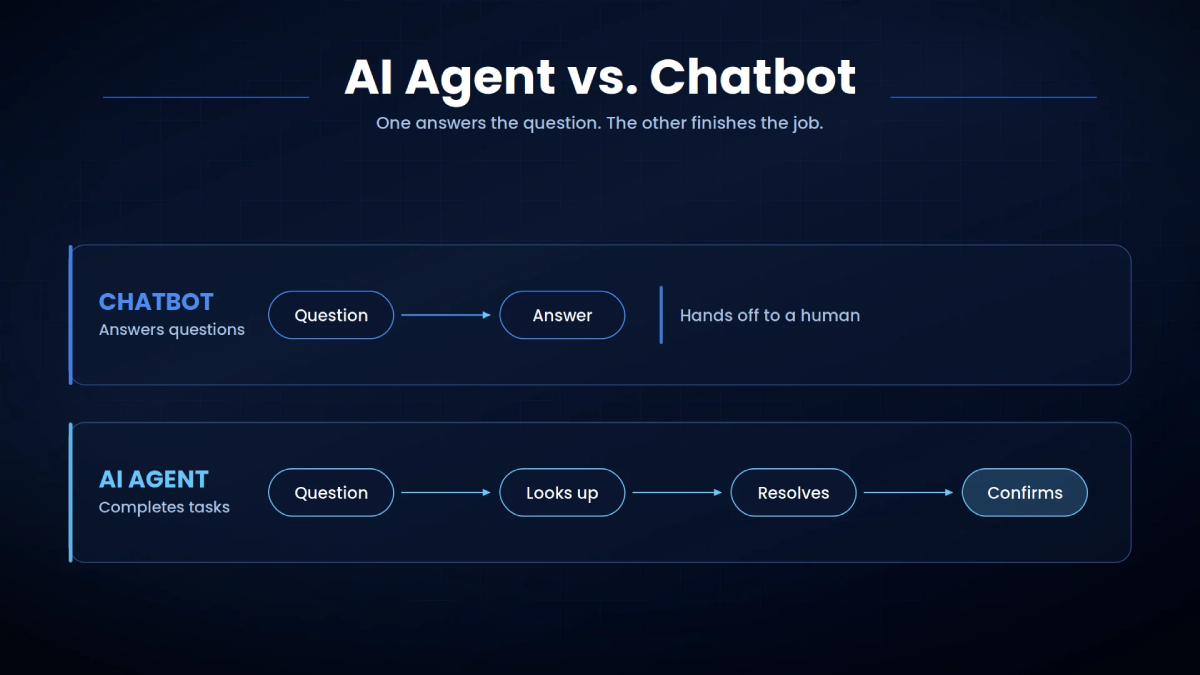
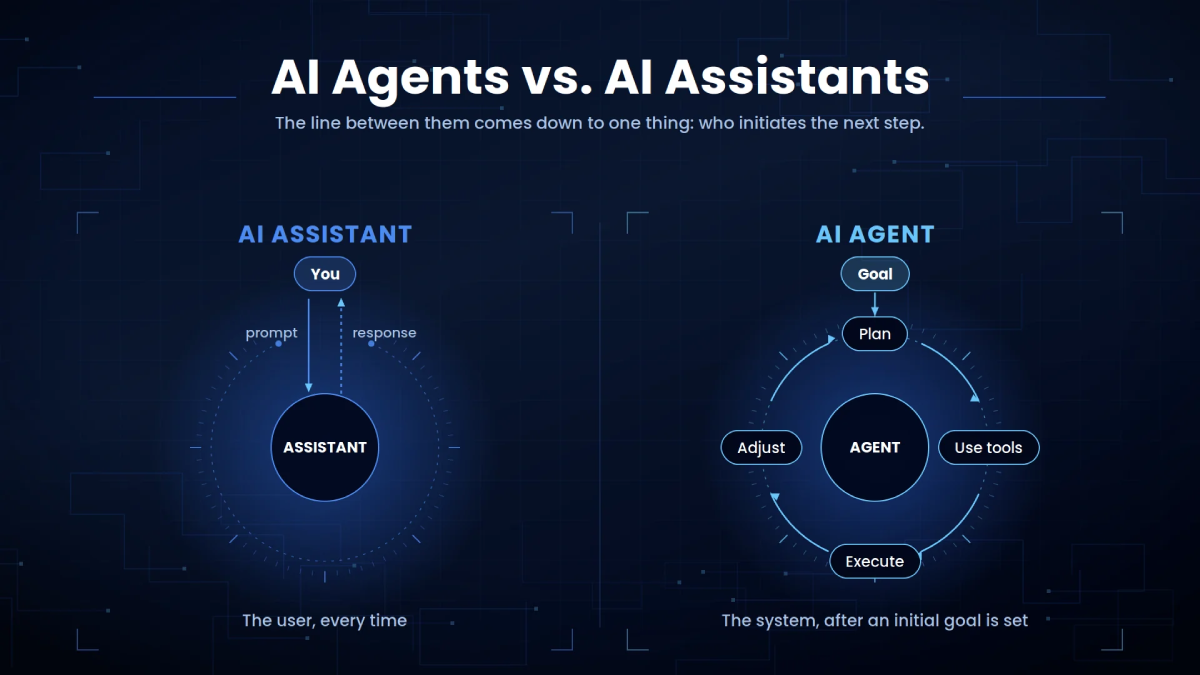
It spans everything from simple rule-based automation (auto-routing an approval) to AI-driven workflow automation that can make judgment-adjacent decisions, like flagging which invoices need review versus which can process automatically. The distinction that matters when evaluating platforms: basic automation follows fixed rules. AI business process automation adds the ability to handle exceptions, learn from patterns, and make decisions that used to require a person to think about the specific case in front of them.
Why It's Moved From IT Project to Business Strategy
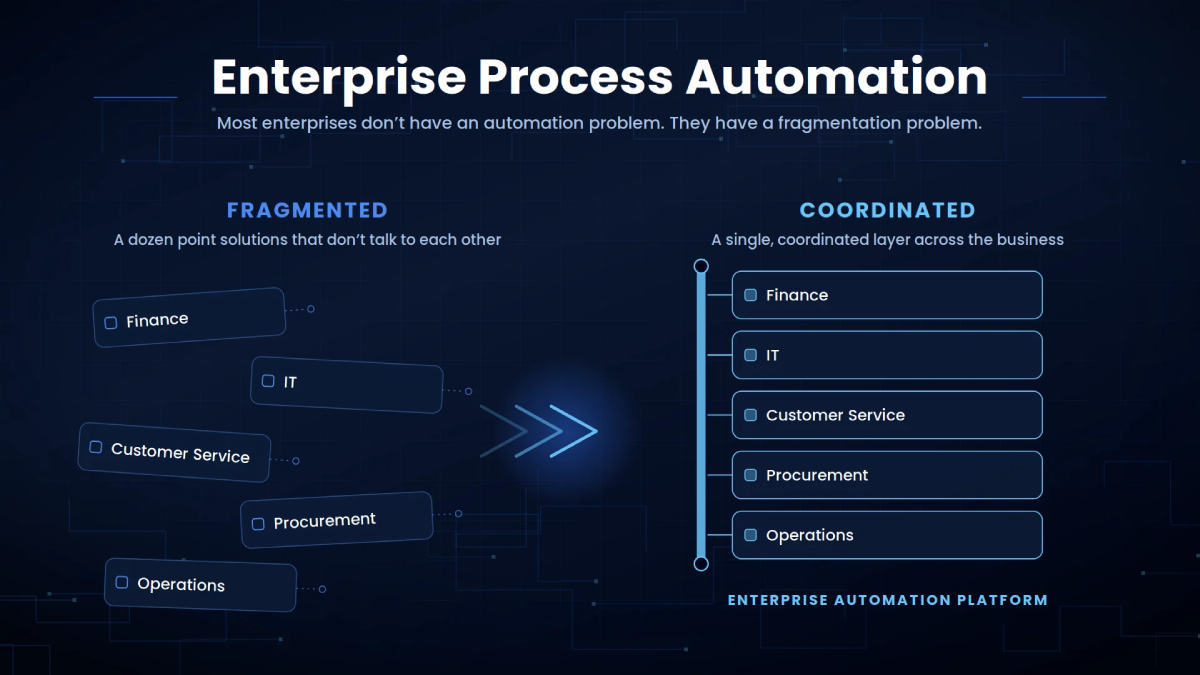
Yet adoption doesn't equal maturity. Most of that 66% is running automation in isolated functions, not as coordinated infrastructure — which is exactly where the fragmentation problem described above comes from, and exactly where the next round of ROI is sitting unclaimed.
Where Enterprise Process Automation Delivers Real Impact
Enterprise Workflow Automation
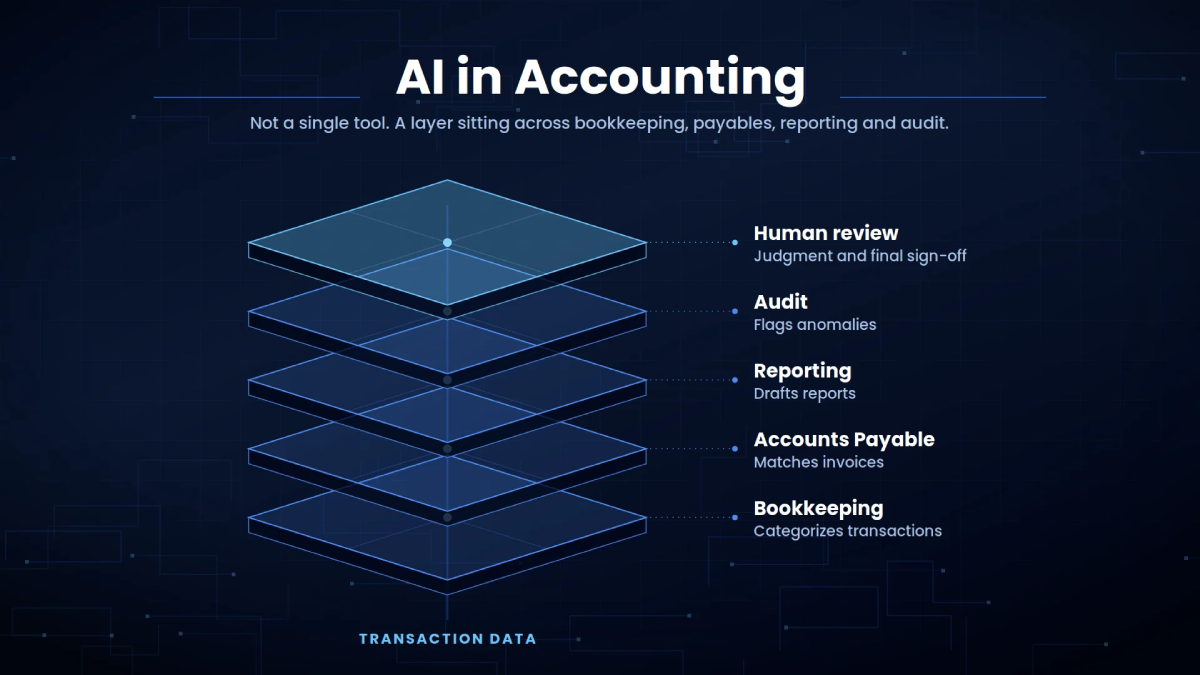
AI Business Process Automation
Finance and Procurement Automation
IT and Operations Automation
Benefits of an Enterprise Automation Platform
- Removes the coordination tax of moving information manually between systems and departments
- Cuts operational costs — McKinsey and Gartner analyses put basic automation savings at 20–30%, with more intelligent, AI-driven automation reaching 50–70% in some functions
- Creates a single source of truth for process status instead of scattered spreadsheets and email threads
- Frees staff for judgment-heavy work instead of manual data movement
Real-World Use Cases
- A logistics company routes shipment exceptions to the right team automatically instead of a dispatcher manually triaging emails
- A healthcare provider automates insurance eligibility checks before an appointment instead of staff calling to verify
- A manufacturer automates purchase-order approval up to a set dollar threshold, escalating only exceptions
- A retailer automates return processing end-to-end, from request to refund, without a support agent touching most cases
Choosing the Right Process Automation Solution
- Integration depth: Does it connect to your existing ERP, CRM, and legacy systems, or does it require replacing them?
- Scalability: Can it handle department-level automation today and enterprise-wide orchestration later, or will you outgrow it in a year?
- Governance and audit trail: Can you see and explain every automated decision, especially for anything touching finance or compliance?
- Build vs. buy: Off-the-shelf platforms move faster initially; custom-built automation fits your specific process better long-term and avoids paying for features you'll never use.
Best Practices for Rolling Out Enterprise Automation
- Map the process before automating it — automating a broken workflow just makes the broken workflow faster
- Start with one high-volume, well-defined process rather than an enterprise-wide rollout on day one
- Build in human review for exceptions and edge cases from the start, not after something breaks
- Treat automation as a coordinated platform decision, not a series of disconnected departmental tools
- Measure hours saved and error reduction, not just how many processes are "automated"
Conclusion
Build Intelligent Enterprise Automation With Arcitech
Arcitech helps organizations design and develop enterprise process automation solutions, AI-powered workflows, system integrations, intelligent automation platforms, and custom AI agents. Whether you want to automate individual workflows, connect disconnected enterprise systems, or build an organization-wide automation platform, talk to Arcitech about creating an automation strategy aligned with your existing technology and business operations.
Frequently Asked Questions
1. What is Enterprise Process Automation?
Enterprise Process Automation is the use of software, workflow technology, integrations, and AI to automate business processes across departments and enterprise applications.
2. What is an Enterprise Automation Platform?
An Enterprise Automation Platform is a centralized technology environment used to design, execute, integrate, manage, and monitor automated workflows across an organization.
3. What is Enterprise Workflow Automation?
Enterprise Workflow Automation is the automation of multi-step business processes such as approvals, onboarding, order processing, procurement, customer service, and finance workflows.
4. How is AI used in business process automation?
AI can interpret documents, analyze data, understand requests, detect anomalies, generate content, predict outcomes, recommend actions, and help automate processes that are difficult to manage using fixed rules alone.
5. What are the benefits of Enterprise Automation?
Enterprise Automation can reduce operating costs, speed up processes, minimize manual errors, improve visibility, increase employee productivity, and help organizations scale business operations more efficiently.
Check out our Social Media