AI Agent Orchestration: How Multiple Agents, Tools and Workflows Work Together
- Arcitech
- 29th September 2026
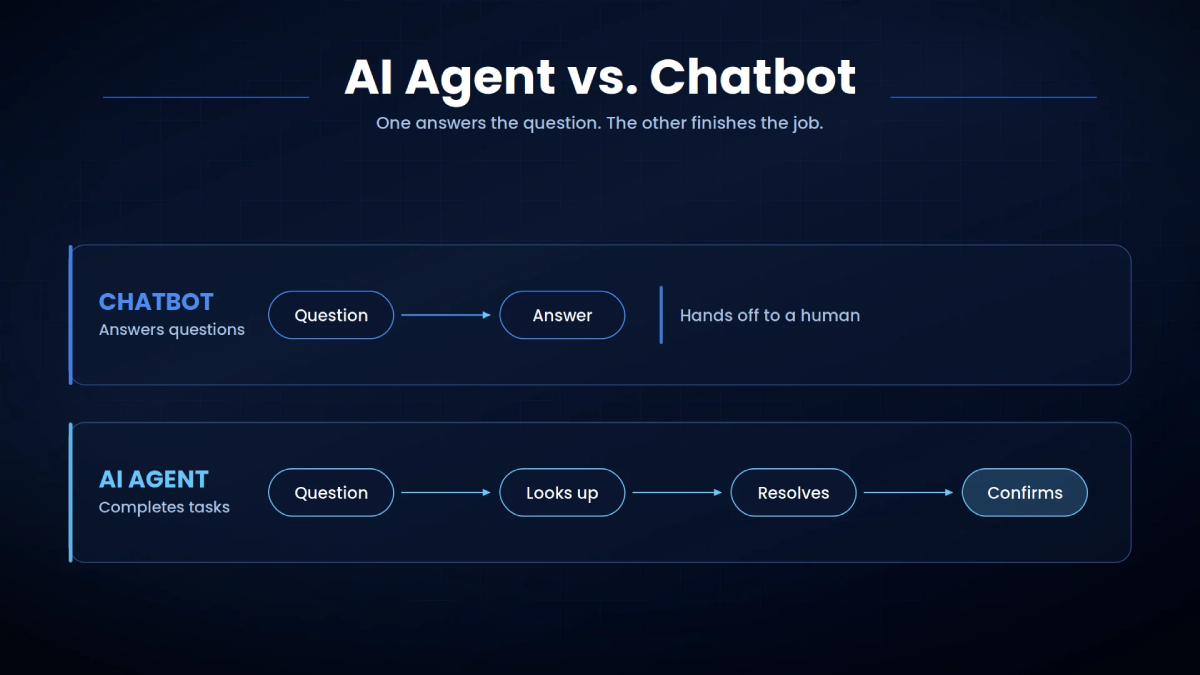
Consider a customer requesting a replacement for a damaged product. Completing the request may require an agent to interpret the message, verify the order, check warranty terms, review inventory, create a replacement order, arrange delivery, and update the CRM.
AI agent orchestration coordinates these activities. It determines which agent or tool should perform each task, manages the sequence of actions, shares relevant context, handles failures, and maintains control over the complete workflow.
What Is AI Agent Orchestration?
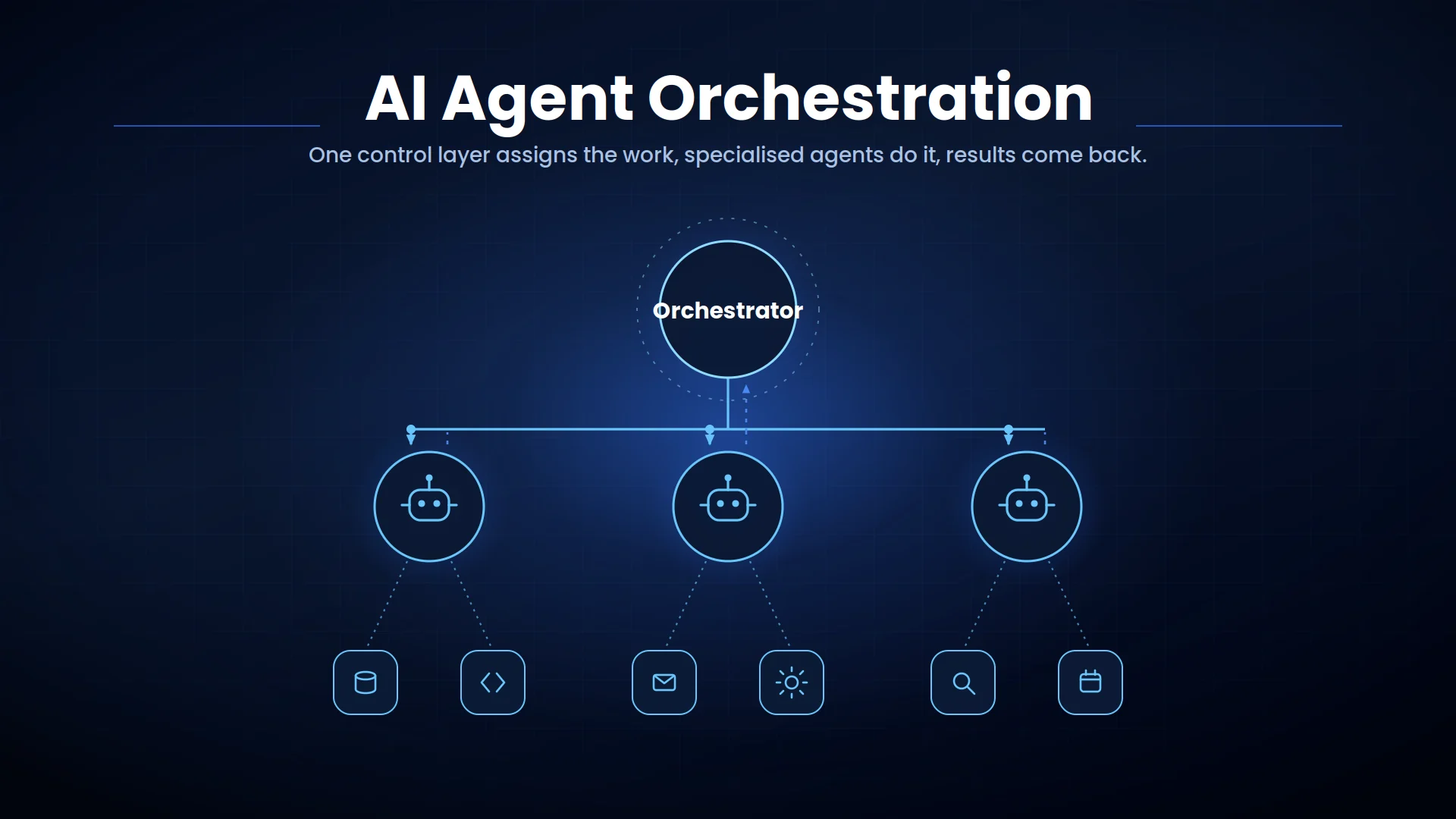
An orchestrator acts as the control layer. It receives a request, breaks the objective into tasks, assigns work to appropriate agents or tools, monitors progress, and combines the results.
Agent orchestration may involve:
- One agent using several tools
- Multiple specialized agents working sequentially
- Agents working in parallel on separate tasks
- A supervisor agent assigning and reviewing work
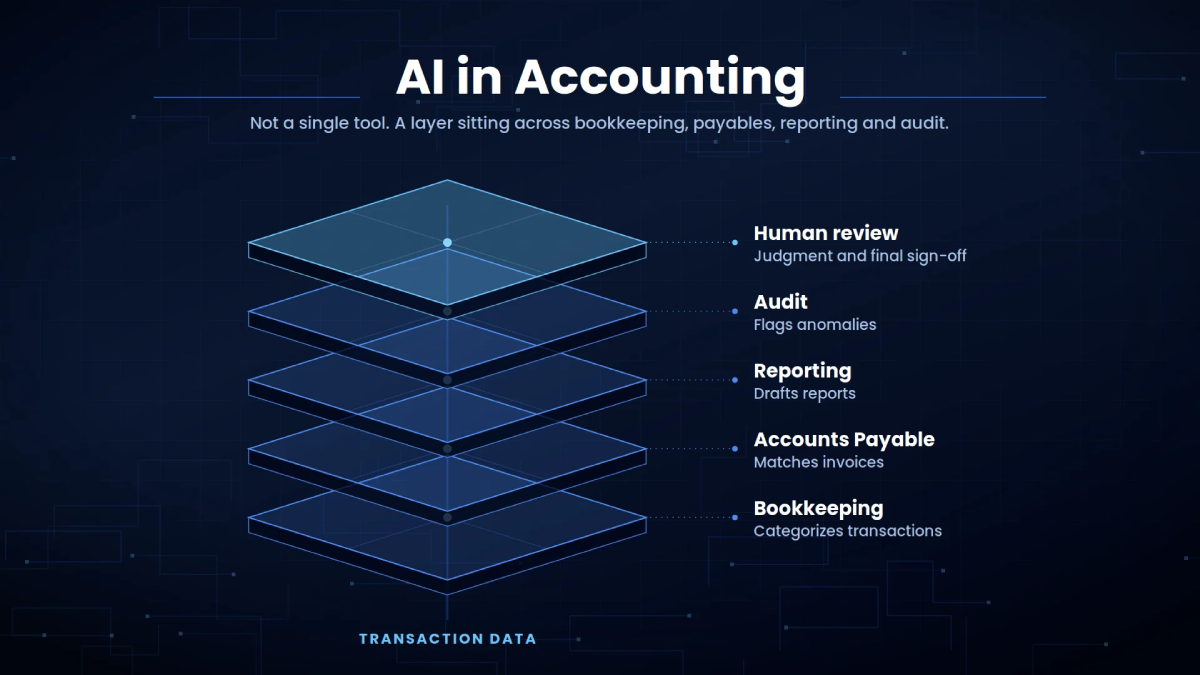
- Human approval at sensitive decision points
- Business rules controlling what agents can do
How AI Agent Orchestration Works
Orchestrator or Supervisor
Specialization can make agent behavior easier to test, control, and improve.
Tools and Enterprise Systems
The language model provides reasoning and interpretation, while tools retrieve current information or perform actual business actions.
Shared Context and Memory
Access should follow enterprise permissions. An agent must not receive information simply because another agent accessed it earlier.
Rules and Guardrails
Monitoring and Recovery
Common Multi-Agent Orchestration Patterns
Sequential Orchestration
This pattern is suitable for document processing, research, verification, and approval workflows.
Parallel Orchestration
For example, separate agents may evaluate financial, legal, and operational risks during vendor assessment.
Supervisor-Agent Pattern
Group Collaboration
Microsoft documents these approaches in its AI agent orchestration patterns. Google Cloud and AWS also describe multi-agent architectures in which specialized components collaborate under defined coordination and control mechanisms.
Business Benefits of AI Agent Orchestration
Automation of Complex Processes
Better Specialization
Greater Flexibility
Improved Operational Control
Enterprise Use Cases for Agent Workflow Orchestration
Customer Service Resolution
IT Service Management
Sales Operations
Supply Chain Management
Financial Operations
Best Practices for Implementing AI Agent Orchestration
Begin With a Bounded Workflow
Use the Simplest Effective Architecture
Restrict Tool Access
Make Workflows Observable
Test the Complete Process
Maintain Human Oversight
Measuring Agent Orchestration Performance
These metrics reveal whether additional agents improve performance or merely add complexity and cost.
Conclusion
The strongest systems do not maximize autonomy. They assign responsibilities clearly, limit access, verify results, and preserve human authority over consequential actions.
Build Enterprise AI Agent Workflows With Arcitech
Arcitech’s AI software development services support the development of custom AI agents and multi-agent systems. Our AI integration services connect these agents with enterprise data, APIs, applications, and approval workflows.
Talk to Arcitech about building secure agent orchestration aligned with your business processes and governance requirements.
Frequently Asked Questions About AI Agent Orchestration
1. What is AI agent orchestration?
It is the coordination of AI agents, models, tools, data, and workflows to complete a defined objective.
2. What is multi-agent orchestration?
Multi-agent orchestration coordinates several specialized agents that work sequentially, in parallel, or under a supervisor agent.
3. How is orchestration different from an AI agent?
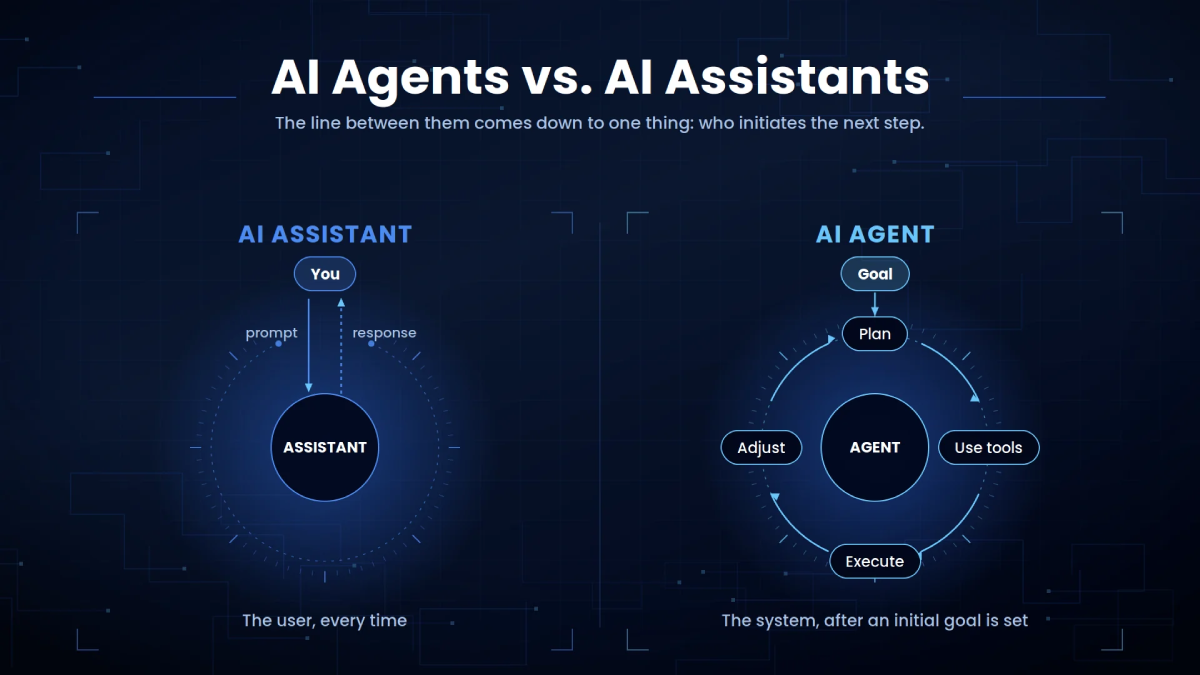
An agent performs tasks. Orchestration determines how agents and tools collaborate, exchange context, and progress through a complete workflow.
4. Does every agentic workflow require multiple agents?
No. A single agent with well-designed tools is often more efficient. Multiple agents are useful when genuine specialization or parallel work is required.
5. How can enterprises secure orchestrated AI agents?
Use least-privilege access, tool restrictions, data controls, human approvals, audit logs, continuous monitoring, and tested recovery procedures.
Check out our Social Media