AI in Supply Chain Management: The Complete Guide
- Arcitech
- 02nd September 2026
Businesses today must coordinate suppliers, manufacturing, inventory, warehouses, transportation networks, customer demand, and global logistics while responding to disruptions that can occur with little warning.
Traditional supply chain systems are often built around historical data, fixed rules, and manual planning. These approaches can struggle when demand changes suddenly, suppliers fail to deliver, transportation costs rise, or inventory becomes unbalanced.
This is where AI in supply chain management is creating significant value.
Artificial intelligence can help organizations analyze large volumes of operational data, predict future demand, identify potential disruptions, optimize inventory, automate decisions, and improve logistics performance.
For business leaders, AI is becoming less about experimentation and more about building supply chains that are faster, more resilient, and easier to manage.
What Is AI in Supply Chain Management?
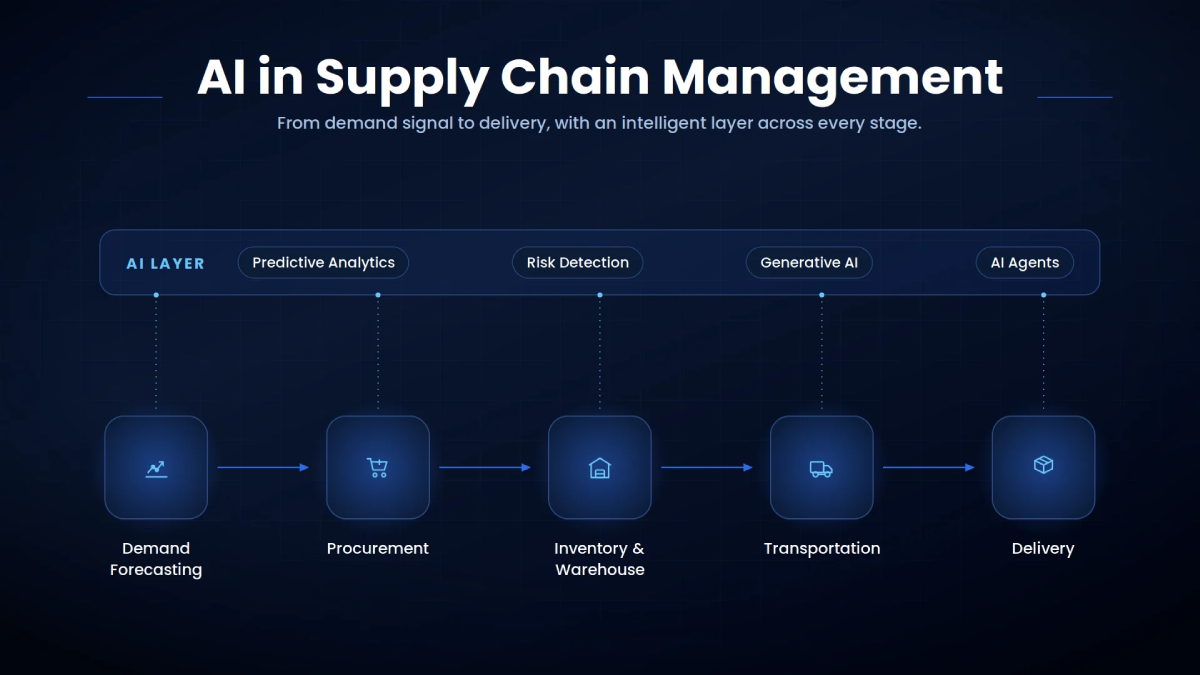
Supply chain AI can combine technologies such as:
- Machine learning
- Predictive analytics
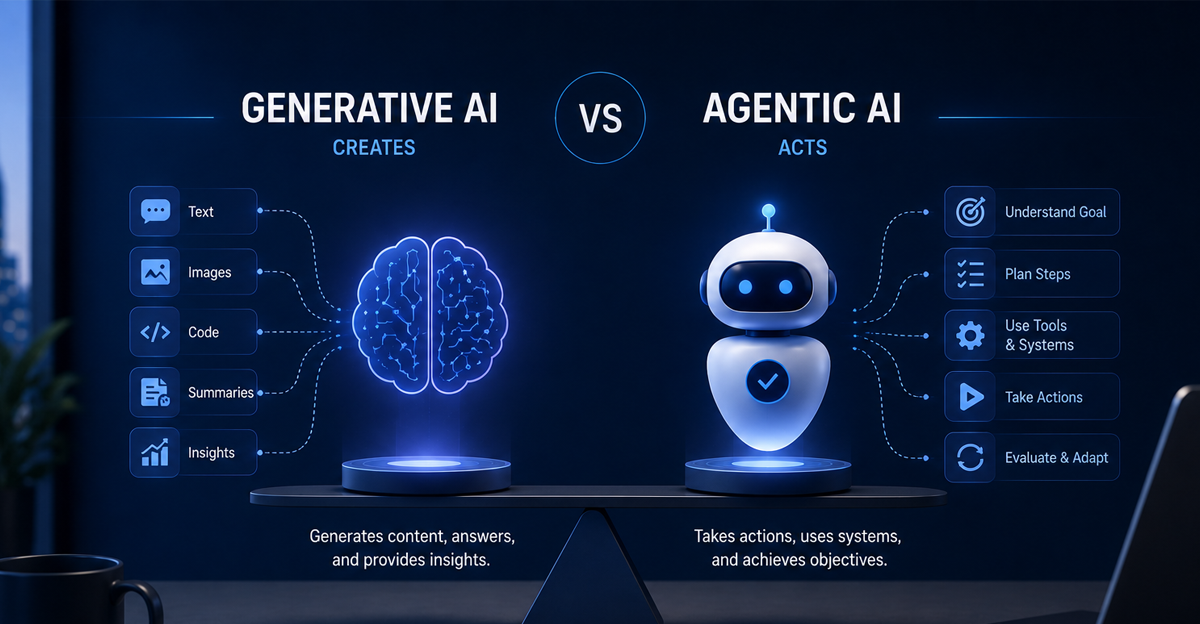
- Generative AI
- Natural language processing
- Computer vision
- Intelligent automation
- AI agents
- Optimization algorithms
For example, an AI-powered supply chain platform could analyze sales trends, supplier performance, weather conditions, inventory levels, transportation delays, and customer demand before recommending changes to purchasing or distribution plans.
How AI Is Transforming Supply Chain Management
AI-Powered Demand Forecasting
Traditional forecasting methods often depend heavily on historical sales data. AI models can incorporate a wider range of signals, including seasonal patterns, promotions, market trends, regional demand, pricing changes, and external events.
This allows businesses to create more dynamic demand forecasts.
More accurate forecasting helps organizations avoid two expensive problems:
- Overstocking, which ties up capital and increases warehousing costs.
- Understocking, which can cause lost sales, delayed orders, and poor customer experiences.
Intelligent Inventory Management
Supply chain AI can analyze inventory movements across locations and recommend appropriate stock levels based on expected demand, supplier lead times, order frequency, and service requirements.
AI-driven inventory systems can help businesses determine:
- When inventory should be replenished
- Which products require safety stock
- Where inventory should be positioned
- Which items are at risk of becoming obsolete
- Which locations may experience shortages
AI in Logistics and Transportation
AI transportation solutions can analyze routes, vehicle availability, fuel costs, traffic conditions, delivery schedules, shipment volumes, and carrier performance to identify more efficient transportation plans.
AI can support:
- Dynamic route optimization
- Delivery scheduling
- Carrier selection
- Fleet utilization
- Freight consolidation
- Estimated arrival times
- Transportation cost analysis
AI for Supply Chain Risk Management
Artificial intelligence can help companies identify risks earlier by continuously monitoring operational and external data.
Predictive models can detect unusual patterns such as declining supplier performance, repeated shipping delays, changing lead times, or unexpected demand fluctuations.
Supply chain teams can then evaluate alternative suppliers, adjust inventory strategies, change transportation routes, or increase safety stock before the disruption becomes critical.
The objective is to move from reactive supply chain management toward predictive risk management.
Generative AI in Supply Chain Management
Instead of manually searching dashboards and reports, managers can ask questions using natural language.
For example:
- “Which suppliers have shown the largest increase in delivery delays this quarter?”
- “Which products are likely to experience inventory shortages next month?”
- “What caused transportation costs to increase last week?”
When connected securely to ERP, warehouse, procurement, and transportation platforms, generative AI can become an intelligent assistant for supply chain teams.
AI Agents and Autonomous Supply Chain Operations
AI agents can potentially coordinate multi-step tasks across connected systems rather than simply providing recommendations.
For example, an AI procurement agent could:
- Detect that inventory is approaching a threshold.
- Review demand forecasts.
- Compare approved suppliers.
- Analyze pricing and delivery performance.
- Prepare a purchase order.
- Request human approval.
- Update the ERP after approval.
These agentic systems can reduce the amount of manual coordination required across complex supply chain workflows.
Key Benefits of AI in Supply Chain
Improved Forecast Accuracy
Lower Inventory Costs
Greater Supply Chain Visibility
Faster Decision-Making
Improved Logistics Efficiency
Stronger Supply Chain Resilience
Real-World AI Supply Chain Use Cases
Manufacturing
Retail
Logistics
Food and Beverage
Healthcare
Best Practices for Implementing AI in Supply Chain Management
Organizations should begin by identifying specific operational problems where AI can generate measurable value.
Priorities may include:
- Reducing inventory costs
- Improving forecast accuracy
- Increasing on-time deliveries
- Reducing procurement delays
- Improving supplier visibility
- Optimizing transportation expenses
AI systems depend on reliable information from ERP systems, warehouse platforms, transportation systems, procurement software, IoT devices, and supplier databases.
Organizations should also establish clear human oversight for high-impact decisions, especially those involving suppliers, purchasing commitments, customer deliveries, and financial risk.
The most effective approach is usually to start with a defined use case, measure performance, and expand AI capabilities gradually across the supply chain.
Conclusion
From demand forecasting and inventory optimization to logistics, supplier management, risk detection, and generative AI assistants, artificial intelligence can provide supply chain teams with faster insights and more effective decision support.
The greatest value comes when AI is integrated with existing enterprise systems and operational workflows rather than deployed as an isolated tool.
Companies that combine strong data foundations, intelligent automation, predictive analytics, and human oversight can build supply chains that are more efficient, resilient, and capable of adapting to changing business conditions.
Build a Smarter Supply Chain With AI Automation
Arcitech helps businesses design and develop AI-powered supply chain solutions, intelligent automation workflows, predictive analytics platforms, custom AI integrations, and enterprise software tailored to complex operational environments.
Whether you want to improve demand forecasting, automate procurement, optimize logistics, connect supply chain systems, or develop an intelligent supply chain platform, talk to Arcitech about building an AI solution aligned with your operational goals.
Frequently Asked Questions
1. What is AI in supply chain management?
AI in supply chain management is the use of technologies such as machine learning, predictive analytics, generative AI, and intelligent automation to improve forecasting, inventory, procurement, logistics, transportation, and supply chain decision-making.
2. How is AI used in supply chains?
AI is commonly used for demand forecasting, inventory optimization, supplier risk analysis, route planning, transportation optimization, warehouse automation, procurement, and predictive supply chain analytics.
3. What are the benefits of AI in supply chain management?
The main benefits include improved forecast accuracy, lower inventory costs, faster decision-making, better supply chain visibility, improved logistics performance, and greater resilience against disruptions.
4. How is generative AI used in supply chain management?
Generative AI can summarize supply chain data, generate reports, answer operational questions, analyze supplier information, explain disruptions, and assist teams with planning and decision-making through natural-language interfaces.
5. Can AI fully automate supply chain management?
AI can automate many repetitive and data-intensive supply chain activities, but complete automation is not practical for most organizations. Strategic procurement, supplier relationships, exception management, risk decisions, and other high-impact activities still require appropriate human oversight.
Check out our Social Media